

Reviewed by: Chris J Kenworthy, for Armadillo magazine.
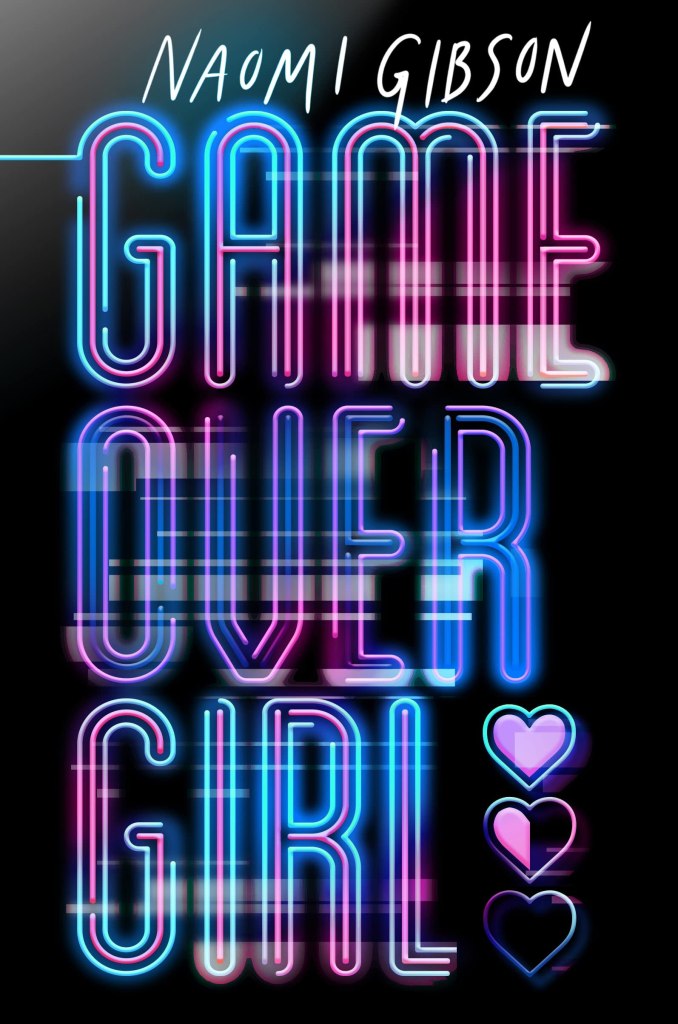
‘Game Over Girl‘ is a mind-bending story about Lola, a teenage girl who hallucinates most of the things she enjoys, and who has been invited to test a virtual reality game called Better Than Life at her new boarding school.
It is explained that the game is actually an experiment by Dr Zats, to see how teenagers “use VR to process their anxiety [and] work through their issues in a virtual setting.” There is only one rule that applies to the game, which each of the participants proceed to break: never re-create real places and people in Better Than Life.
Lola uses the game to re-create her house, with a perfect self and a real dad that loves her. However, something is hiding in the basement, and it threatens her entire existence – both virtual, and real. Coupled with her hallucinations, the novel therefore becomes a story within a story, as the reader tries to figure out what is real and what is imagined.
Author Naomi Gibson uses subtle themes and motifs to bind ideas together in her latest creation. Doors, for instance, are used as an exit to other virtual places, whereas the ticking of the metronome in Lola’s virtual world is symbolic of the violent reality that lurks in her basement.
As five of the six classmates use the game outside of lesson time, Lola later notices that only Wai seems unaffected by the game, as he “was the only one who seemed his usual self […] He didn’t put in any extra game time. He stuck to the schedule and […] wasn’t addicted like the rest of us were.” The novel could therefore be interpreted as a metaphor for social media, how it is used to create a perfect online self, and how it makes people feel about their realities.
With a lot of essential but mind-bending world building, ‘Game Over Girl‘ is slow to get started, but it is a page-turning thrill ride that will grip you to its pages. As a Young Adult novel, some scenes of graphic violence mean it may not be suitable for all readers, but ultimately it is a raw and powerful story about the pitfalls of creating a perfect virtual self.

 Stowmarket Reporter